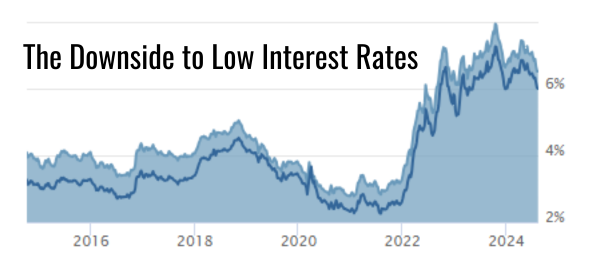
 I have always felt that The FED lowered interest rate too far and for too long at the onset of the pandemic. It was a boon to current homeowners. Values and equity and rents soared. In recent decades, central banks around the world have frequently turned to low interest rates as a tool to stimulate economic growth. While low interest rates can provide an immediate boost to the economy by making borrowing cheaper and encouraging spending, they also have significant long-term effects, particularly on the housing market. Understanding these effects is crucial for policymakers, investors, and potential homeowners.
Increased Housing Demand
One of the most direct impacts of low interest rates is an increase in housing demand. Lower interest rates reduce the cost of mortgages, making it cheaper for individuals to buy homes in the short term. This is because their monthly payments are affordable. This increased affordability can lead to more people entering the housing market, either to purchase their first home or to upgrade to a more expensive property. Over time, this surge in demand can drive up home prices, as more buyers compete for a limited supply of housing.
Rising Home Prices
As demand for housing increases, so do home prices. This effect can be particularly pronounced in desirable areas where the supply of new homes is constrained by factors such as zoning laws, geographic limitations, or a lack of available land. Over the long term, this can lead to significant appreciation in home values. While rising home prices can benefit current homeowners by increasing their home equity, they can also make it more difficult for first-time buyers to enter the market.
Housing Market Bubbles
Extended periods of low interest rates can contribute to the formation of housing market bubbles. When borrowing is cheap and home prices are rising, speculative behavior can become more common. Investors may purchase properties with the expectation of selling them at higher prices in the future, further driving up prices and contributing to unsustainable growth. If and when the bubble bursts, it can lead to sharp declines in home values, widespread foreclosures, and significant economic disruption. During the Great Financial Crisis we had easy credit. In recent years we have had cheap credit which has produced similar conditions.
Reduced Housing Affordability
While low interest rates can initially improve housing affordability by lowering monthly mortgage payments, the long-term effect of rising home prices can offset this benefit. As home prices increase, the amount of money needed for a down payment and the overall cost of a home can rise faster than incomes, making it more challenging for people to afford a home.
Changes in Housing Supply
Low interest rates can also influence the supply side of the housing market. With cheaper borrowing costs, developers may be more inclined to invest in new housing projects, leading to an increase in the supply of new homes. However, this effect can be tempered by other factors, such as land availability, regulatory constraints, and construction costs. Additionally, if developers anticipate that low interest rates will not be sustained, they may be hesitant to commit to long-term projects.
Increased Leverage and Financial Risk
Low interest rates can encourage homeowners and investors to take on more debt. While this can enable individuals to purchase more expensive homes or multiple properties, it also increases financial risk. Higher levels of leverage mean that borrowers are more vulnerable to changes in interest rates and economic conditions. If interest rates rise or if there is an economic downturn, highly leveraged homeowners and investors may struggle to meet their mortgage payments, leading to higher rates of default and foreclosure.
Long-Term Economic Implications
The long-term effects of low interest rates on housing can have broader economic implications. Rising home prices can contribute to increased household wealth and consumer spending, providing a boost to the economy. However, if housing becomes too expensive, it can reduce disposable income for other expenditures, potentially slowing economic growth. Additionally, the concentration of wealth in real estate can make the economy more susceptible to housing market fluctuations.
In summary, low interest rates can have significant and far-reaching effects on the housing market. While they can make homeownership more accessible in the short term, they can also lead to rising home prices, housing market bubbles, reduced affordability, increased financial risk, and broader economic implications over the long term. Policymakers must carefully consider these effects when setting interest rates and implementing housing policies to ensure a balanced and sustainable housing market. For individuals and investors, understanding these dynamics is crucial for making informed decisions in the real estate market.
The low interest rates of the early 2020's made a lot of people equity rich, but it also trapped many homeowners because no one wants to give up a sub 4% mortgage. In addition First time home buyers can't afford to buy a home with an artificially high price and a nearly 7% mortgage.
Subscribe to my newsletter here.

Serving The Greater Fort Lauderdale area since 2006
You can reach me 954-895-2431


If You Like This Post, Please Share. Thanks!