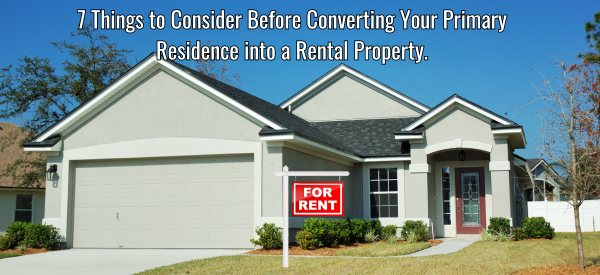
Turning your primary residence into a rental property can be a natural progression for some or a necessity for others due to market challenges. Perhaps you have heard the term accidental landlord. Either way it requires careful consideration and planning. Here are key factors to consider before making this transition:
1. Financial Implications
Mortgage Considerations
If you have a mortgage on your home, review the terms to ensure there are no restrictions against renting it out. Some mortgages, especially those with lower interest rates for primary residences, may have clauses that prohibit renting.
Tax Implications
The tax landscape changes when you convert your primary residence into a rental property. Consult with your accountant. You can deduct expenses related to maintaining the property, but you will also need to report rental income. You can now get the benefits of depreciation. Additionally, consider capital gains tax implications if you decide to sell the property in the future.
Insurance Needs
Your homeowner's insurance policy will need to be converted to a landlord insurance policy. Landlord insurance typically costs more but provides coverage for risks associated with tenants and the associated liability.
2. Legal and Regulatory Compliance
Local Laws and Regulations
Familiarize yourself with local landlord-tenant laws, which govern everything from security deposits to eviction procedures. Compliance with these laws is crucial to avoid legal issues. Check with your municipality. They likely require some kind of registration or business tax receipt.
Zoning Laws and Homeowners Association (HOA) Rules
Check zoning laws and HOA/Condo regulations to ensure renting your property is allowed. Some neighborhoods have restrictions on rentals or short-term leases. If you had to go through an approval process when you purchased your home, your tenants will likely have to as well.
3. Property Management
Self-Management vs. Property Management Company
Decide whether you will manage the property yourself or hire a property management company. Managing it yourself can save money but requires significant time and effort. A property management company can handle tenant screening, maintenance, and rent collection but will charge a fee, 5 to 10% is common.
Maintenance and Repairs
Regular maintenance is essential to keep the property in good condition and retain its value. Budget for ongoing repairs and unexpected issues. Are you going to provide lawn and pool service or make the tenant responsible?
Pets
Be sure to have a pet policy in place before you market your property. Service and Emotional Support Animals can not be denied, but they must have the proper paperwork.
4. Tenant Screening
Background and Credit Checks
Thoroughly screen potential tenants by conducting background and credit checks. This helps ensure they have a reliable rental history and the financial stability to pay rent on time.
If you choose to hire a Realtor to find your tenants, they can run the credit and background checks for you.
Rental Agreements
Draft a comprehensive rental agreement that outlines the terms of the lease, including rent amount, payment due dates, maintenance responsibilities, and policies on pets and smoking. Consider having a lawyer review the agreement to ensure it complies with local laws. This is an another area a Realtor can assist with completing standardized leases.
5. Market Analysis
Rental Market Assessment
Research the local rental market to determine the appropriate rent price. Setting a competitive rent rate is crucial to attracting quality tenants while ensuring the rental income covers your expenses.
Property Valuation
Evaluate your property’s rental potential based on its location, size, amenities, and condition. Properties in desirable areas with good schools and amenities typically command higher rents.
6. Long-Term Planning
Investment Goals
Clarify your long-term goals for the property. Are you planning to rent it out indefinitely, or do you have a timeline for selling? Your goals will influence your decisions regarding property improvements, rental rates, and tenant selection. Be sure to budget for periodic vacancies, and capital improvements for the future, like roofs, painting, appliances and air conditioners.
Be aware that taxes, HOA fees and insurance continually go up. Be sure to keep your rents in line with the market so you don't fall behind. Many new landlords struggle with raising rents. Remember it is a business you are running. Otherwise you should just put your money in a different type of investment.
Exit Strategy
Have an exit strategy in place. This could involve selling the property, moving back in, or converting it to another use. Understanding your options and the market conditions will help you make informed decisions.
7. Emotional Considerations
Detachment from the Property
Transitioning from a homeowner to a landlord requires detachment from the emotional aspect of your home. You’ll need to view the property as a business asset and make decisions based on financial considerations rather than personal attachment.
Tenant Relations
Building good relationships with tenants can lead to longer lease agreements and better care for your property. However, you must balance friendliness with professionalism to maintain clear boundaries.
In summary, converting your primary residence into a rental property can be a rewarding venture, providing a steady income stream and potential tax benefits. However, it requires thorough preparation, understanding of legal and financial implications, and a commitment to managing the property effectively. By considering these factors and planning accordingly, you can make the transition smoothly and maximize the benefits of your new rental property.
Call me if you need help with your rental property.
Subscribe to my newsletter here.

Serving The Greater Fort Lauderdale area since 2006
You can reach me 954-895-2431


If You Like This Post, Please Share. Thanks!